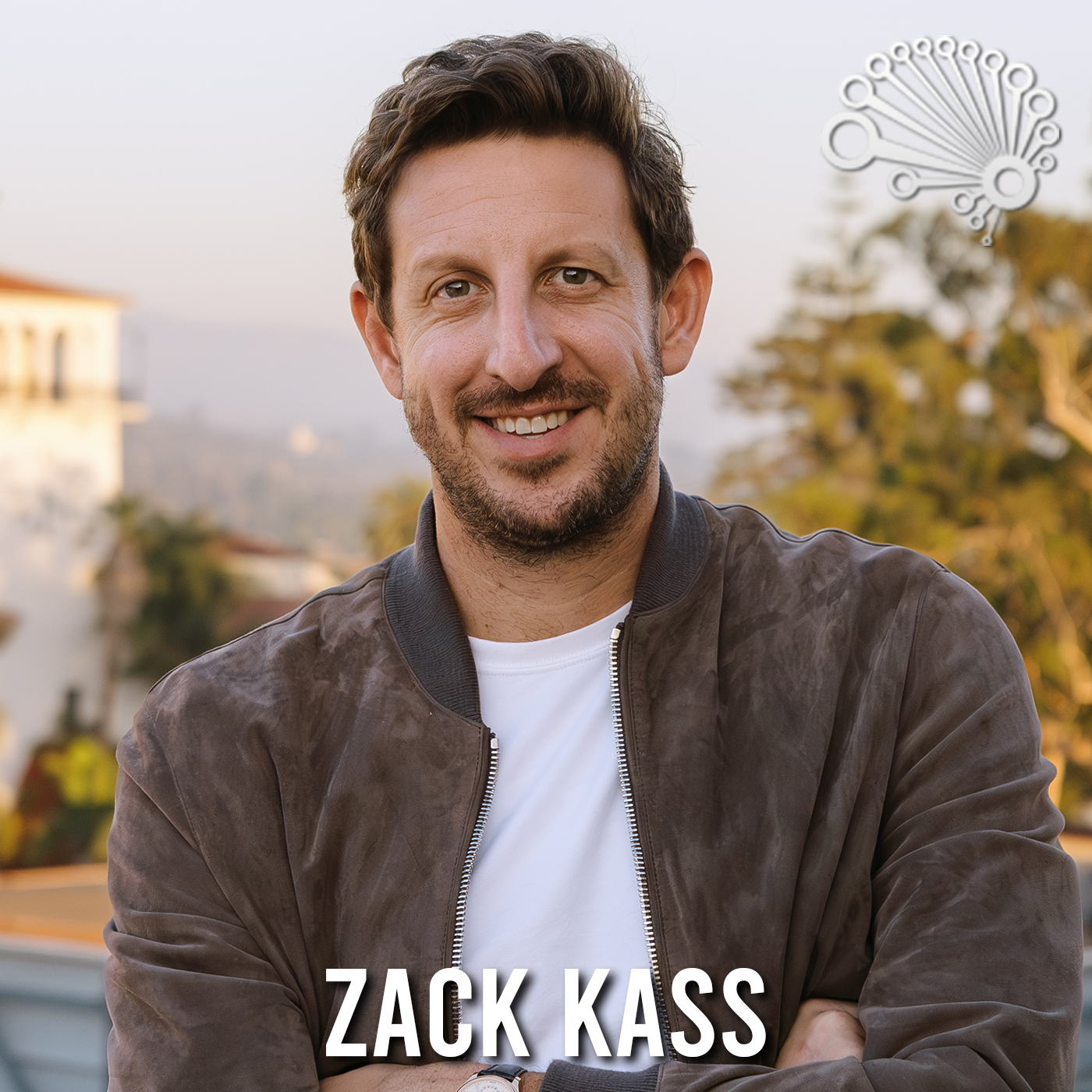
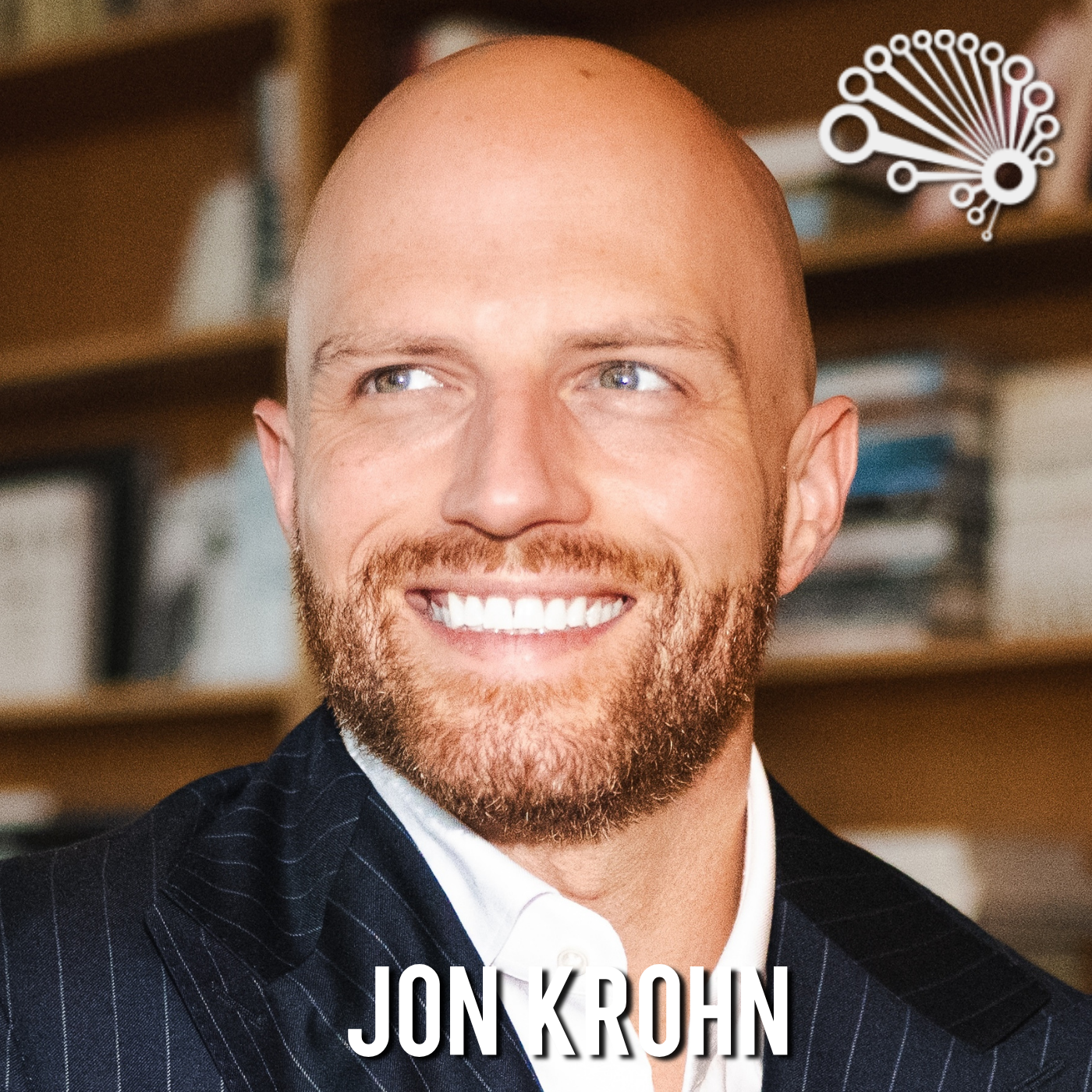
Jon Krohn: 00:00:00 If you’d been alive in Europe during the Renaissance, you would’ve experienced rapid technological and societal progress, and yet you would likely have believed society was about to collapse. Sound like a familiar circumstance? Welcome to episode number 975 of the SuperDataScience Podcast. I’m your host, Jon Krohn. Today’s guest, Zack Kass, was head of go- to-market at OpenAI when ChatGPT was launched. Now a leading AI advisor, he’s written the sensational brand new bestselling book, The Next Renaissance, in which he makes the compelling case that despite all the doom and gloom in the headlines, we are living through the greatest leap in human progress yet, and that the rapidly arriving age of cheap, abundant intelligence will free us to be more human, not less. Hear all about it in today’s inspiring episode, one of my favorites ever.
00:00:44 This episode of SuperDataScience is made possible by Anthropic, Cisco, Acceldata, and the Open Data Science Conference.
00:00:53 Zack, welcome to the SuperDataScience Podcast. Such an honor to have you on the show. Where are you calling in from today?
Zack Kass: 00:00:59 Thanks for having me, Jon. I’m calling in from Santa Barbara, California.
Jon Krohn: 00:01:03 Yeah, yeah, yeah. Is Santa Barbara, would you consider that still to be the Bay Area?
Zack Kass: 00:01:07 No. The question that it gets at … No, it’s definitely not the Bay Area. The question that gets asked, and this is a niche debate, but it does exist. Is Santa Barbara Southern California or Central California? Is it Central Coast or this Southern Coast? And you can make the argument it’s the northernmost Southern California coastal city, and you can also make the argument that it is the southernmost central coast city. Increasingly, it does feel like a part of this southern coast.
Jon Krohn: 00:01:39 What are the implications of being grouped in the southern or central?
Zack Kass: 00:01:43 Well, whereas you might ask, is Carmel part of the Bay Area? And it’s not. Is Santa Cruz? Yeah, it probably is technically still considered part of the Bay Area. That’s Central Coast. So where Santa Cruz makes the argument, are we a Northern California coastal city, or are we a central California coastal city? Which is interesting. And it’s weird in the way that the Northern California is, but it’s a little more developed in the way that the Central Coast is. So that’s a reasonable argument. It really is like, is it Morro Bay? Is it Pismo Beach? Is it Avila Beach? Is it at Carmel? Or is it Big Sur? Or is it more San Diego, Los Angeles, Ventura? And it has beautiful flavors of both, but you probably are going to feel more like it is a Southern coast city than it is a Central Coast city.
00:02:43 Although every day I go outside and I’m like, no, this is just a special place, which is why I think it’s so easy to have an interesting debate about this.
Jon Krohn: 00:02:52 Nice. At the intersection. So my next question is going to lead into starting to get into the content of this podcast episode, but it’s perfect.
Zack Kass: 00:02:59 Yeah. Wait, sorry. I don’t understand. Your listeners aren’t interested in …
Jon Krohn: 00:03:04 Okay. Well, I hope they are for this very next one, which is, is Berkeley in the Bay Area or where does Berkeley fall?
Zack Kass: 00:03:11 Berkeley is definitely in the Bay Area. Yeah.
Jon Krohn: 00:03:13 Okay. All right. So you studied history at UC Berkeley, and then you spent more than a decade at the frontier of AI where you helped make history because you were the head of go- to-market at OpenAI. At the time that ChatGPT became the most rapidly adopted general purpose technology in history. That’s crazy. We are going to talk about that a bit in this episode, but the primary focus and where we’re going to start is with your new book, The Next Renaissance, which is already a bestseller on tons of not just Amazon bestseller lists, but mainstream publications like USA Today. It’s been making the top 10 on those kinds of book rankings. And in it, you draw from the rich history of human progress, which experiences great leaps, critical inventions or geopolitical shifts that propel us forward by orders of magnitude. And you argue that with AI, we’re experiencing the greatest leap yet.
00:04:10 Really exciting. Tell us more.
Zack Kass: 00:04:13 We named the book for two reasons, the way we did. The first is it’s easier for people to grasp. I really want to call the book Unmetered Intelligence, which is the idea that at some point intelligence will feel more like a resource than anything else. And then I wanted to explore the implications of unmetered intelligence. And the publisher was like, look, maybe you’ll get that as a sticky IP, but it’ll take a long time and most people are going to stare at it and not understand. The purpose of the next Renaissance is to give people a clear understanding of what I believe could happen, acknowledging that there are some obvious analogous imperfections. And the other reason that I actually like the Renaissance before I go into what I think could happen is it borrows from history a chance to disarm a lot of the most cynical people today who stare at the current moment and say, oh, everything’s really bad.
00:05:09 And of course it isn’t, but if you stare at media all day and you sort of become victim of the news cycle, it’s understandable you would think so. And what I have to remind people is if you had been alive during the late middle ages, you might have very reasonably believed that humans were going to be extinct. And there was some argument to be made that we should. We lost half the population during the late and middle ages and it was bad. It’s just categorically bad. And it wasn’t that long ago. It was a little less than a thousand years ago. And so we try to borrow some interesting non-obvious parallels as we explore the idea. But the principle idea is that whereas the Renaissance sort of catapulted humans forward in terms of science and math, and of course, lots of discoveries of our known universe, it also catapults us forward on the basis of political thought and arts and culture, and principally the idea of a sovereign individual.
00:06:17 It was the first time that humans since really hunter gatherers, which Harari talks about a lot, that humans were sort of given the opportunity to say, “I could do more than just this. We graduated from surfdom to something else.” And that is the principle argument in this book, which is that especially at the rate that the models are compressing, so this is important for … The listeners don’t understand this, especially at the rate that the models aren’t just getting good, but they’re getting cheap. Everyone goes, “Well, to owners of the data centers who are going to decide what models we run.” I go, “No, the CPU can already do, as we saw with MultBook or ClaudeBod, the CPU can already do an enormous amount of processing. I can run Kimi K2 on my Mac studio.” So we are quickly moving to a world where the technology is far more propagated and where the diffusion is far less rate limited by a monolithic power because it’s just energy and a pretty inexpensive chip that controls access.
00:07:30 That improves privacy, security, all sorts of other features. And when that happens, an individual’s ability to do a thing is much greater. And obviously there are a bunch of negative implications with that. I mean, people are like, “Well, that sounds great.” Yeah, but then a lot of the population is psychopathic and they’re going to be able to do more. And there are all sorts of reasons to think that this could go well and some other reasons to think it might not. And whereas with the Renaissance, a lot improved. We also suddenly exposed ourselves to much more violent catastrophic conflict. Wars were fairly slow and drawn out, and it was harder to kill lots of people at once, and that changed with technology. So you have to just explore these ideas. And mostly what we try to do is give the average person, what I say, sort of the educated layperson, a chance to understand the moment.
00:08:26 And for all your listeners, I wrote the book for your mom. I mean, truly, I mean, if you’re listening to this podcast, you know a lot about this, maybe my ideas change your opinion, maybe they don’t. But really, what I want is to equip the people around you to have a reason to feel like they’re participating in this world versus you’re building something that’s just going to affect their life and they can’t opt in. There are choices that we can all make to build a better world and this tries to argue that.
Jon Krohn: 00:08:53 Yeah. You and I are aligned totally on what’s going on with the way people feel and the reality of what’s happening in terms of technology and the positive opportunity. I went through, it seems like we are recently in a particularly bleak moment in terms of the general public’s perception of AI and technology and just society. Consumer confidence is at all- time lows. These measures that have been tracking US consumer confidence since the ’50s are at all- time lows, despite the stock market doing well, the US economy at least doing well, it’s pretty wild. And it seems like, to me, it sounds like the same … We have the same boogeyman, you and me, I think, which is media coverage. And if you think about what the media, for the most part, people aren’t paying for media. For the most part, people are getting free news on the internet or on their TV or very cheap.
00:10:04 Maybe they’re paying for the cable subscription or satellite, whatever, but they’re getting … The TV channel is ad supported. And if you’re watching anything that is app supported, if the platform that you’re on is ad supported, their interests are not aligned with your interests. Their interest is to keep you watching and to keep you watching. They make things scary. They get your emotions going. They make it feel like if you don’t keep watching, you’re going to really be missing out on something big. When for the most part, things are just slowly getting better and there’s not that much to worry about, but that wouldn’t make great news. And so there’s this narrative of things being scary and we’ll get into the episode for people, even whether we’re technical or not, there are things that we need to be prepared for at a time when say you’re talking about … I love this idea of unmetered intelligence, and we’ll dig into your definition of that more in this episode, but that is one of the fundamental … The same capability of AI today, relative to two years ago, is one two hundredth of the cost, a half a percent of the cost to get that same capabilities two years ago, and that is not going to end.
00:11:26 Compute gets cheaper, engineering breakthroughs happen. It’s just that crazy exponential cheapness of intelligence is going to continue, while at the same time, we have every seven months, the length of a human task that can be handled competently by an AI system doubles. So you have capabilities growing polynomially, you have costs decreasing exponentially. Those two things together mean, yeah, unmuted intelligence is a reality. It’s coming. We don’t have it yet, but cheap intelligence everywhere is coming, and I think it’s going to do more harm than good, but there’s definitely going to be a lot of change to grapple with. You just like
Zack Kass: 00:12:08 A really long time.than good or more good
Jon Krohn: 00:12:10 Than harm? Oh, thank you. Yes. I think it’ll do more good than harm. My goodness.
Zack Kass: 00:12:14 I mean, but it is … Just to go back to the point, I think that the media landscape is a public enemy, and I think we should talk about it as such. I actually also think that
00:12:33 While media is primarily to blame for a lot of the reasons that certainly our parents are so worried no matter what side of the aisle they’re on, I think that what we also never really reconciled or we haven’t reconciled yet is that the internet gave us unmetered information. And the tragedy, and I wrote about this, the tragedy of unmetered information is that we learned everything. All at once or a lot without any of the wisdom to make sense of it
00:13:16 Or actually the intelligence. Our brain, you can make the argument, our brain is running a GP2 model and we set up this enormous database and started calling it and it broke. We just couldn’t make sense of everything that we were learning about. And this is one of the arguments I make in the book, which is it’s not just that we have all these negativity biases and these selection and confirmation biases, rosy retrospection, it’s that we learn too much. And when young people ask me all the time, they’re like, “How are you optimistic about the future?” And I said, “Would you want to be born any day other than today?” And often they have to think about it because they’ve not really thought about it. And for most people, the answer is no. And I can explain why and they can explain why and we can all debate.
00:14:08 But what I remind them is when I graduated high school, I didn’t have to know anything that they know. I couldn’t really. I mean, it just wasn’t the opportunity to learn about all of the horrors of the world. Kids are graduating high school now and knowing more about genocides, historical or present, whatever they may be, than any of their ancestors combined. And the sanctity of the childhood is being lost. And so we’re raising people that aren’t less empathetic, they are suicidally empathetic. It turns out they so desperately want to make the world a better place and they feel like they can’t. And so it shows up in all these weird performative messes. But I would say I think the bigger issue right now is we didn’t give ourselves much of the context that’s required to actually understand all the things. And so against the current landscape where things are broadly pretty good relative to our great-grandparents’ lives and our parents for that matter, we have no perspective and we sort of talk ourselves collectively into this idea that everything’s broken.
Jon Krohn: 00:15:21 Really well said. You sound like somebody who has written a book about this and something. So going back to your book title, we kind of got onto this long discussion about a lot of the main points of your book, though there’s many more that we’re going to cover in this episode, but in the title, The Next Renaissance, something that I didn’t know is that in the Renaissance, the first Renaissance, it was characterized by a sense of decline, which is wild to think about now when you think about all of the creativity that they had, not just technologically, but as you also say, artistically, politically, it’s wild to know that they weren’t just going around being like, “Wow, this is so great. Everything’s getting better.” So yeah, I don’t know if you have more that you want to tell us about that historical. Well,
Zack Kass: 00:16:09 Gutenberg’s Burning Press invented in the 1400s during the late middle ages illegal By order of the church for a couple hundred years. And it’s a reminder, we
00:16:24 Talk about institutions today having so much control, and they do. They still have a lot of control in our lives. You can’t imagine how much control they used to have. The church said, “Cool, here’s a new piece of technology, and for a hundred years, we aren’t comfortable with you. ” I mean, literally, Gutenberg dies without ever realizing the printing press would matter much.
Jon Krohn: 00:16:47 Wow, I did not know that. And
Zack Kass: 00:16:50 Why would the church want to print a bunch of … Why would the church would want anyone to print books? And I don’t say this as someone who hates the church. I mean, what interest at the time was it in empowering a bunch of people to think their own thoughts? When you stare at the current state of institutional control, I argue that people are just sort of scrambled by distrust, but actually have a lot more intellectual sovereignty than we’ve ever had. My parents always like, “Yeah, the media…” I mean, I love my parents, by the way, but there was like, “Yeah, the media, it’s all time levels of distrust.” I was like, “I don’t think you realize how much people lied to you in the 50s and 60s.” And by the way, it’s not necessarily because they, out of malice, a lot of people just knew nothing.
00:17:41 You couldn’t have conflicting ideas because there was one reporter on the front line. So you heard stories about a war from literally one guy. And I go back to these moments and I’m like, “Man, technological progress used to be hard fought.” I mean, it truly, the centuries … And by the way, then the printing press becomes something that they can commercialize and only a hundred years after that do people actually start investing in reading. Literacy lags really until the, I mean, really 19th century globally. Not long ago, we didn’t read, not because we didn’t want to, we couldn’t. And the reason we couldn’t is that there was no books to teach people with. Yeah.
Jon Krohn: 00:18:24 It’s pretty wild to think 150 years ago, it was something like 98% of the world was illiterate, and now it’s the inverse. It’s like 98% of adults are literate.
Zack Kass: 00:18:35 And then Jon, people go, “Well, and now we have this rising rate of literacy and that spells doom.” And I go, “Yeah, also it spells luxury.” My hot take is that, and I write about this in the book, I don’t know if you’re … Anyway, there’s a section of the book called Idiocracy, which people like.
Jon Krohn: 00:18:55 I’ve seen the movie.
Zack Kass: 00:18:56 Yeah. Well, I borrowed from the movie. What the movie never really explains this fun film is that presumably the reason everyone gets stupid is because they can. You can’t really go backwards intellectually unless you can evolutionarily do it. And the reason I argue that people have a chance now to stop thinking is because we’ve created so much convenience. We’ve lost … In the process of doing away with most of our vicious friction, we’ve now done away with a lot of our virtuous friction. And I argue that it’s one of the costs, one of the marks in a very affluent society is that a lot of people can choose to do nothing.
00:19:40 Everyone bemoans that no one knows how to drive a stick shift. I go, “Well, yeah, it’s kind of nice though, isn’t it? ” You don’t have to … And then you sort of realize that in doing away with a bunch of the stuff that our parents or great-grandparents had to do, walk three miles uphill to school both ways. In doing away with a lot of these things, we build a much better world, and we sort of realized at the end that there is some friction that’s super valuable, and we’re kind of discovering that now, that requiring that kids read really well, even though they don’t have to, is pretty important. And so I think we’re going to dial that back.
Jon Krohn: 00:20:19 There’s a lot of jumping off points that I could take from what you just said, but the one that I’m going to pick is with intelligence becoming so cheap, unmuted intelligence coming in the next five, 10 years, the most, having vast, abundant, super cheap intelligence. You talk about literacy being a luxury today, but even just thinking for yourself could be a luxury. I mean, we already kind of see that in the way that a lot of us probably do our workflows today where you could have ChatGPT read your email thread and suggest a next response. And a lot of people are doing that. That is literally a built-in function that Gemini provides in Gmail. And so if intelligence… Yeah, what are your thoughts on this? What do we do to maintain some kind of intellectual muscle or is that important? Should we just go into the idiocracy film kind of world where we’re just enjoying life and not worry about having-
Zack Kass: 00:21:27 Well, okay. So let’s talk about idiocracy first because I think a lot of parents point to that. So what we’re seeing right now among Gen Z, and I hate picking on Gen Z because we gave them phones. I mean, I do think that we all owe gen … No, no. I mean, do you have kids?
Jon Krohn: 00:21:44 I don’t have kids. I would love to have kids. I
Zack Kass: 00:21:47 Think that we all owe Gen Z an enormous apology and I think we need to show them a lot of grace because they grew up with a very addictive device that not only did it zap their dopamine receptors, but it also exposed them to a bunch of terrible information. It also got them introduced to incredible unlimited forms of bullying and got them addicted to an attention economy. How could they be doing great right now? We didn’t really give them a great shot and they’re still doing okay. But Gen Z does appear to be the first generation in many to not be smarter than the last. And at the current rate, Gen Z will die dumber on average than millennials, which is a remarkable thing because every generation prior for a long time now had been getting smarter than the last. And that’s not great. It’s just not great.
00:22:48 Less likely to read, less likely to ride a bike, less likely to swim on average. Buried in that data though is something that I talk about in the book, which is that Gen Z appears to be a generation that will have nearly a standard deviation, higher occurrence of genius or savant globally. And whereas in the developed world, Gen Z is on average trending down in the developing world, Gen Z is trending up. Why? Because all the tools that our parents couldn’t have dreamed of to grow up and all the tools that a lot of kids are misusing or abusing to sort of do nothing, some kids are using to find new advantage and to get ahead in a world where they would never have otherwise gotten a shot. And so you’re seeing this incredible new overperformance in a multidisciplinary way across art and science, math, physical activity, sport.
00:23:51 I mean, Olympic records continue to get broken younger and younger. One of the fastest women in the world right now is a high school in the United States who taught ourselves on YouTube. So you see this evidence of young people using technology to overperform and underperform. And so what I talk about in the book is this idea of a K-curve, and it’s pretty pronounced right now already. An intellectual K-curve where if you want to do a bunch, if you want to be great at it, whatever it is, you have a better chance now than ever. It’s not defined by how much money your parents have. It’s not defined by where you grew up. It’s not defined by what college you go to. And increasingly, Those signals are diminishing. And if you want to do nothing, you can too,
00:24:41 Right? You can wake up and do nothing. Now, I will say just before I go any further, the nothingness of the Gen Z stereotype predates AI. That’s why I really don’t like AI as the boogeyman here. We start seeing this in 2012 when screen addiction starts kicking in and it becomes pronounced during COVID when iPad kids were put in their rooms by themselves to just do anything they wanted and they discovered games and gambling and porn. And so what I would say is we should be careful to make AI the sort of idiocracy boogeyman when in fact it predates to a period when kids stopped doing summer jobs, they stopped being required to do physical activity or extracurriculars. Everyone now got … If you wanted to get a note out of a thing you didn’t want to do, you got a doctor’s note out. We stopped wanting to make kids uncomfortable.
00:25:45 And this also coincides with all the research that came out during that period, namely, but in particular, Jonathan Heights, The Coddling of the American Mind, which is, I think, just as good of a book, if not better than anxious generation, and sort of argues like, “Hey, we stopped making kids uncomfortable. That’s going to have some serious repercussions.” And that came out in 2013. So we see this world where people are sort of choosing to do a bunch or choosing to do little pronounced now, not by how much money you make, but I argue by your agency, how much you want it. And we now stare at the precipice of this K-curve amidst a backdrop of a very broken education system that demands that you know something, but not how you know it or why you should know it. And the American education and the industrial education apparatus in particular is not particularly helpful right now in a moment where what we really want is for kids to care about something, anything really, so that they can learn a why, so that they can learn a how, not just the what, because a bunch of kids raised to know the what will start to feel more and more sort of mechanical, and then they will fall into this trap, which we’re seeing.
00:27:10 Whereas kids raised to believe in the consequences of their actions from an early age, this idea of agency, what do you want to do? How do you want to achieve it? Why do you want to achieve it? The ideas of the teachings of people like Rudolph Steiner, who started Waldorf School, the Montessori school, Mackenzie Price at Alpha School, even actually traditional educators like Eva Moskowitz at Success Academy are talking about accountability, new levels of accountability. You have to prove yourself in new effective ways and teaching this idea of ownership and responsibility, all of these ideas are going to start to become way more popular when people realize that their kid can do lots of things and also nothing. And what we want is not for the kids to know everything, we want them actually to be capable of a lot more.
Jon Krohn: 00:28:01 So you mentioned a lot of school systems there. I actually was only familiar with Montessori personally. I also came across Alpha School in our research for your episode, so you obviously know a lot more about education systems. Do you think that AI tools can play a positive role as well with things like personalized learning in the classroom, helping people … So it means that this situation that we’ve had historically, if I think back to my grandmother, she was in a school where all grades were in one room and a teacher is having to figure out how to teach all grades at once. Grades one through eight, or I guess in the US they would say first grade through eighth grade. I’m Canadian, Zach.
Zack Kass: 00:28:52 Where did she grow up?
Jon Krohn: 00:28:54 In Ontario. In rural Ontario, no electricity, no running water in the 1930s, 1940s, kind of like a two hour drive out of Toronto. And yeah, so her experience of education was where a teacher has 20 kids and those kids are all different ages, five to 13. And we figured out over time how to get children, for the most part, in most parts of the developed world, you’ll now have kids that are around the same age, around a one year band progressing together. But of course, even in that scenario, all these kids are learning at slightly different rates. And so the kids that are really good at math, in the math portion, they’re bored. And so it seems to me like there’s this opportunity with AI to be having personalized education for everyone. And maybe the teacher kind of becomes more of offering oversight and encouragement and that kind The human element, the empathy.
00:30:01 I’ll turn the floor over to you.
Zack Kass: 00:30:04 I mean, we could, and actually I do. The book, if it has a lasting legacy, it will likely be its ideas for parents. And actually, I wrote about it this morning. I wrote in a LinkedIn post that I think that I didn’t realize when I was writing the book who I was writing it for. And in fact, I wrote the book originally as simply a place to think about my own arguments. It really wasn’t for anyone else. And I never really considered that people would read it. I didn’t really consider that anyone would read it. And this is also an aside, but it’s fun. In the process of writing it, I started getting really into a bunch of other nonfiction and I was just devouring my favorite nonfiction because writing nonfiction is … Entertaining nonfiction is quite challenging. I mean, especially if you’re talking about a technical subject.
00:31:07 And so I went back and read a bunch of my favorite nonfiction writers, one of which is Hunter S. Thompson, who’s just all time.
Jon Krohn: 00:31:15 That’s Fear and Loathing in Las Vegas is his most famous title, I think.
Zack Kass: 00:31:20 It’s certainly one of them. Yeah. Yeah. Fear and loathing in Las Vegas. Fear and loathing on the campaign trail is … Anyway, there’s a long list. But he wrote once. The worst part about writing a book of meaning is that someone smart will have to read it. And for all of his nihilism, he was quite sensitive and didn’t like the idea, didn’t like critics, and didn’t like the idea that people would … I mean, most great artists don’t. And I became paralyzed when I realized as we were wrapping up the book that people outside of my circle would have to start reading it. And still to this day, I’m quite nervous for people to like it. But I also, in the process, didn’t consider who would read it.
00:32:14 Most great writers write with someone in mind, with a reader in mind. And I wrote with ideas in mind. I was like, “I need to put these on paper and stare at them.” And it became very clear to me in the last probably two weeks. The book’s been out a month. We sold 37,000 copies in the first month. And in the last two weeks, it became very clear I wrote the book for parents. And I wrote the book for anyone responsible for another human right now who is trying to make sense of a world that is increasingly unfamiliar against a relentlessly dystopian backdrop of news and media, who wants to feel like they are an active participant, who wants to have evidence in defense of their hope, who wants to be able to wake up over breakfast and say to their kids, “No, you’re going to be great.” To say to their kids what our parents said to us, or at least what our parents would’ve wanted to say to us.
00:33:22 “The world is going to be a special place and you’re going to make it better, and here’s what I’m going to do to make it better. And here’s the role we all need to play. “And that’s the evidence we tried to give people and the conversation we tried to start. The chapter about education is the best chapter in the book. I think it’s like I’m an objective observer as much as anyone. And it was my favorite to write in part because my wife is a Waldorf teacher. Waldorf is an alternative education school, much like Montessori that’s a little more alternative, quite frankly, in the ways of its thinking. And I feature in the education section three luminaries, three education luminaries, two of whom are living and are very important. One is Eva Moskowitz, who has rebuilt a charter, rebuilt public education actually. Eva Moskowitz ran for education board in New York City and on reform, and they shunned her.
00:34:18 They kicked her out. She went and started this now exceptionally famous charter school in New York that everyone should look up and learn about called Success Academy. And Success Academy has, I think it’s basically the largest … You know it, Jon. I
Jon Krohn: 00:34:31 Know it, not because I know anything about it, but I have this fellowship at this really cool AI startup in New York called Lightning AI. And so what this fellowship means is that I work out of their office every day, which is pretty sweet because they’re doing amazing things. And next door to the Lightning AI office on 22nd Street next to Madison Square is a Success Academy.
Zack Kass: 00:34:57 Success Academy.
Jon Krohn: 00:34:57 And so I see the sign and I see the kids coming out with their uniforms on, but I actually don’t know anything about it other than there’s this kind of weird connection that I see it all the time.
Zack Kass: 00:35:06 It is a remarkable … So it’s the largest public school system in the country I think now she runs. Now it’s not technically public because it’s charter or it’s not defined as public. And the more you learn about Eva and the more you learn about Success Academy, you learn that she’s sort of become an enemy to the traditional education state. But she has built a program that is guided on accountability principles and she’s doing a much better job. So I simply argue in the book, if we only hold parents, teachers, and students more accountable and treat this as a matter of life and death, which you can make the argument education is. It’s like the outcome of an individual who graduates college, those who don’t, et cetera, or graduates high school, rather those who don’t. It’s a critical moment that we should treat with a whole lot more importance.
00:36:03 Then I feature Mackenzie Price and Mackenzie Price is building Alpha School, which believes that it can reinvent traditional education and take it a step further than Eva Moskowitz by building schools where the student spends two hours a day at a terminal, at a screen, doing self-guided learning, as you described, where a hundred students in the same grade at the same moment can be learning different things at different rates, and that that terminal then feeds back to the student what they’re doing well, what they’re not, and their guide, what they call guides, not teachers who support their education and their parents so that everyone can be on the same page about their development. And it works empirically for some students. It has a higher attrition rate than others. I call this out. I don’t want to be sycophantic. Some students opt out immediately, but they have some really high performers academically.
00:36:58 The rest of the five hours or six hours of the student’s day is spent outside in physical activity, in game theory, in life skills, and learning this idea of grit, the characters and qualities of a great person. It’s working. I mean, parents are voting with their feet right now. And Mackenzie is a friend and I’m a big supporter of what she does. And I think even if you don’t believe in alpha school, you can believe that it is on the right track. And then I spotlight Rudolph Steiner. And Rudolph Steiner founded Waldorf School 150 years ago and made the argument at the time very simply, which was that we were destroying, as he put it, it was the death of the soul and spirit of the child, the industrialization of education. As we hauled kids off to the modern classroom and sat them at desks and made them learn about math so that they could eventually work in a factory, that was the destruction of the soul and spirit of the child.
00:38:00 Now, what he didn’t appreciate, or maybe he did, but didn’t really calculate, was how well we would do economically, such that we would justify the industrialization of education, which we really do, we can, that we needed to industrialize education so that we can arrive at this moment. And my argument in the book is that if we borrow from luminaries like Eva and Mackenzie and Rudolph’s original writings, what we can actually inform is a future of education that hearkens somehow to a past prior to the economic optimization of a child where children, and the purpose of childhood, I argue in the book, is to understand yourself without economic incentives, which no adult gets to do. You cannot, as a rational adult, explore yourself in an open, honest way without economic incentives, but you can as a child. You can know what it means to be a human without wondering if you need to make money, ideally for most children.
00:39:02 And the sanctity of that experience is so important and we’ve lost it in industrial education so much from a young age is about getting a good job. You need these skills in order to get a good job, but maybe that’s not what we need to do anymore. And it’s not because I think work goes away. We can talk about this. It’s not because I think we stop working, it’s because I critically think that the opportunity now to give people the tools to actually explore a world that is going to be way more explorative are abundant. And to your point, the role of the teacher is no longer to be the smartest person in the room. It was never really to be the smartest person in the room. There just had to be. It’s to inspire. It’s to create a safe space where kids can actually explore what it means to be human in a way that only childhood can offer us at that young age.
00:39:51 And it could restore, I think it could restore and in many ways lead to a spiritual awakening. I mean, one of the critical arguments of the book that I have to make carefully, because I don’t want to sound too woo-woo outright, is I think that the next Renaissance is in many ways a spiritual awakening, where people actually start to reconsider the rat race we have been on for a long time and what it truly means to be human and why we are here. And that will start with education. That will start with redesigning the classroom to actually let the child understand why they’re learning, how they learn, what it means to sort of explore versus knowing something.
Jon Krohn: 00:40:40 That was an amazing section of this podcast. Maybe one of my favorite sections that we’ve ever had on the show, your depth of knowledge on how AI can be transforming education and just how education could be transformed in general was absolutely fascinating. We could absolutely spend the rest of the episode on that, but I do have other topics I want to get to. And so I think something that follows really naturally from this, especially the way that you concluded this education section that we were just talking about, is what should we do, those of us who are … So all of that education stuff, very fascinating and also useful for anyone who has kids or wants to have kids. But for those of us who are already in the workforce, the final chapter of your book is Principles for Thriving in the Era of AI.
00:41:29 And you outline four guiding principles to guide how we live, work, and lead in the age of unmetered intelligence. So again, that era of intelligence where there’s abundant, basically effectively unlimited, cheap intelligence everywhere. How do we do that? It sounds like you have a pretty clear vision for how work might change in the coming decades, so fill us in on it and tell us how we can thrive.
Zack Kass: 00:42:00 First, let’s name them. I think it’s important. And it’s so funny, there are multiple editions of the first edition book. So some people got a book where it’s anchor to your mission, vision, values, and adapt your ways and means, which I still like. Some people did not get that version. This is just an editing. This is one of the joys of publishing a physical thing. Everyone got a version that includes, go outside, learn how to learn, be human, and lead with optimism. And these are counterintuitive perhaps. I think some people were surprised that a technologist was sort of giving life advice that sounded a little more Eastern philosophy than Western, but I increasingly realized that so much of my success and so many of the people around me success is and will be defined by these qualities. And success increasingly is sort of a little more loosely defined.
00:43:05 And I propose in the book this idea of happiness function, which has been written about thousands of times. And there’s nothing particularly new here, but it’s this idea that what makes us happy has been pretty consistent for a few hundred thousand years, which is times with friends and family and physical community, ideally outside, around in places of worship, eating. It’s like, that’s the rule. That’s how humans work. We are social creatures who like being with others. And when we die, we wish that we had done more of that. And when we are alive, those who do more of that are happier. This is just one of these rules. Now, the really amazing thing, Jon, when I talk about the happiness function, and this is where I can get Gen Z to start to see what I believe for almost all of human history, Happiness and standard of living were correlated,
00:44:05 Which meant that populations on a relative basis who were doing better were happier. And this was true for a long time until basically very recently, like 2010 recently, when we started to see this weird decline in happiness, especially relative to standard of living or economic quality. And in particular, it became very pronounced in the wealthiest nations. And as of very recently, two of the wealthiest nations on earth are basically the two most miserable, Japan and Korea. Why? What happened there? Well, it’s not hard to figure out that we created a lot of comforts and those comforts helped us live longer. And then we created a bunch of comforts that actually did something else. Technology in the last 20 years hasn’t cured a big disease, but it has given us this, the algorithm, the thing to divide us, the thing to, or to give us the sense of division, the thing to distract us from our friends and family, the thing to distract us from dating at all.
00:45:27 The amount of reclusive behavior in places like Japan and Korea because of device addiction is actually an epidemic and causing their population
Jon Krohn: 00:45:35 Decline. Sorry to really quickly interrupt, Zach. For people who are listening on an audio only podcast format, Zackis talking about his phone. He lifted up his phone when he said this.
Zack Kass: 00:45:44 Yeah, yeah. Who knows what I could have been pointing to there, but I think that we sort of have denounced technology. Those who are cynical and those who are pessimistic talk about technology as this awful force that is going to make things worse. And I go, “No, no, no, no, no, no, no.” This is not an indictment of technology. You do not want to go back to a world prior to anesthesia. You do not want to go back to a world prior to the combustion engine. You do not want to go back to a world prior to antibiotics. You might make the case that you want to go back to a world prior to social media or even the screen. I’m open to that idea. And this is where I start to try to propose in the book, these ideas about building a healthier relationship with technology so that technology can do what it is best at, elevating the human experience, allowing us to be more human, and so that we can avoid the pitfalls that we have experienced over the last 20 years around device addiction and social media.
00:46:52 And basically, those are the tenets. That’s the idea, which is go outside. If you’re reading this book, you probably have means, go outside a lot more, more than you think. Learn how to learn. It’s an opportunity to expand not what you know, but how you will know other things. The skill itself is less interesting than your ability to acquire more skills and take this time to do something that you have long forgotten. Be human. I tell a story that I will tell you right now, which is when I was researching the book, I had two experiences that I write about in the book that really changed how I thought about a lot of these things. One of these experiences is people would always say to me, “We’re always going to work hard. We’re always going to work more. Technology promised to make us more efficient, and it just trapped us.” And I think the older population says this because they are afraid to retire, this idea of identity displacement.
00:47:49 They do not want to stop working even if they have all the money in the world because work is a core part of their identity. And the younger generation says this because they are genuinely terrified that they’re going to have to work forever just to afford their parents’ house. And cost of living is the thing. We should stand up on the rooftops, we should yell about it, and we should use technology to drive down the cost of everything, not just the stuff that a ruling class wants to be cheap. It shouldn’t just be discretionary income that we experience. It should be cheap housing, cheap healthcare, and cheap education. But when I really press people, I say, “Okay, fine. You think we’re going to work more than we ever have? Could I please see your screen time?” That’s what I say to people. Could I please see your screen time?
00:48:29 And what I have learned in this process and what I spend a bunch of time talking about to anyone who will listen is that everyone in the developed world carries an enormous amount of shame with them around their relationship with their device. And the number of people who just won’t show me their screen time. I mean, first of all, the response, the average response is, why does that matter? And recently, someone asked if someone was going to accuse me of being a pervert. But when people finally capitulate, and you’re going to have to narrate for those who are not on video, but they do this, they sort of lean back with their … Or maybe I’ll narrate. They lean back with their phone and they sort of very clandestinely swipe and to figure out what it is we’re both about to discover because everyone is so afraid of being ashamed and embarrassed about their addiction to their device.
00:49:23 And I have learned in this process that one of the reasons people don’t believe that we will work less is because they have totally forgotten what free time feels like.
00:49:33 We have sacrificed our happiness at the altar of a digital display, and we have forgotten that in fact, so much of our life offers us opportunity to think and to recreate in ways that our great-grandparents couldn’t have imagined. And the loss of the interstitial moments, the loss of the joy of free time, even for those struggling who by any measure have actually more of it than ever before, is the saddest part of our current relationship. That informed this section. And then the second thing that happened informed this section, which was in studying the future of work, we went and studied two big service jobs that everyone, not everyone, most people can appreciate, and that most people know someone who is. They are wealth managers and real estate agents. In 1995, the average person selected their wealth manager or real estate agent because they were sure they got them alpha.
00:50:43 So both people were selected and someone would say, “My guy or gal makes me more money, or my guy or gal gets me a better price on the house.” By 2005, people had sort of realized that the internet, MLS, Bloomberg Terminals had made it harder for their guy or gal to make them more money, but they still thought that the best could. And people would talk about, “Yeah, I’m going to get a better price in this home because I have a good real estate agent.” By 2025, everyone, not everyone, most people have agreed that their real estate agent or wealth manager is not going to make them more money on a house or it’s not going to get them better investments. So why do they choose people anymore? Why are real estate agents and wealth managers chosen? Well, wealth managers are fired principally because they don’t pick up the phone.
00:51:29 Accessibility, you don’t pick up the phone, you’re going to get fired. Trust is second somehow. Real estate agents are chosen because people like spending Saturday and Sunday with them. And these are people that you just want to be around and you get fired if you’re annoying, you get fired if you’re cheesy and people are like, “I don’t care that you’re a really good real estate agent. It’s not worth it. ” And that is a mark of a luxury as society. And I started writing about this. I started writing about the fact that the internet had changed things and now unmuted intelligence would too. And then this thing happened, a story that totally changed my life. And it was the reason I decided to write the book and I pay tribute to it at the end. My father is an oncologist. He has been practicing cancer medicine for 40 years.
00:52:18 He specialized in breast cancer. And during his time practicing cancer medicine, the survival rate for breast cancer has gone from 35% to 90%, which is, again, one of these reminders that technology, we can do hard things and that technology serves people or certainly can. And he was given a Lifetime Achievement Award for his 40 years of service very recently. And I went to this award ceremony literally ready to burn the book. I mean, I had reached this breaking point. I didn’t think I wanted to do it anymore. And I went to this award ceremony having acquiesced that the book was just not going to work. Now, a bit about my dad, he was a lawyer before he was a doctor and he speaks a lot of languages. He is a very smart man. And growing up, I had always seen his success attributed directly to his brilliance.
00:53:15 He was saving lives because he was smart. That’s why everyone was surviving breast cancer, and that’s why my dad was such a good doctor. And at this award ceremony, I went very eager to hear people talk about his brilliance. And a patient of his stood up just before he received his award and she spoke for five minutes. For the first 30 seconds, she talked about her patient outcome. She had very recently survived breast cancer and was now giving back to the community. And for the next four and a half minutes, she talked about how my dad made her feel during the process. And she described getting a cancer diagnosis and going to see three oncologists and getting the same three prognoses and the same three treatment recommendations. And she said two things that I will never forget. She said she realized after the third prognosis that the doctor was no longer the smartest thing in the room, that the machine was predicting the next best action because the science had progressed far enough.
00:54:17 And then she said, “Therefore, The bedside manner is no longer a feature. It’s the product.” And it totally changed my life. In that moment,
00:54:31 I realized that my dad was no longer important to the community because he was brilliant. He was important to the community because he was courageous and compassionate. The same qualities that I loved in him as a son, so too, did his patience now. I also realized that if medical oncology, which we have long exalted as one of the most complex medicines to practice, could cognitively commoditize, then what role wouldn’t? And moreover, I realized something else that evening, which I don’t think I’d really appreciated, which is that my father had definitely lost the step intellectually. He’s 77 years old. He’s pretty willing to admit that he is not as sharp as he once was, and he stood up on stage surrounded by a community that absolutely adores him and declared that he’s probably never been a better doctor because he can now dedicate his attention to the soul and spirit of every patient that walks through his doors.
00:55:26 I went home, I did two things the next day. I proposed to my now wife, and I started writing the book again. And I was like, “What we are witnessing is a world where the science actually outsmarts the human and forces us to be more human.” I think so much of the dread right now is misplaced and actually might be stemming from something even weirder and more subconscious. Everyone talks about a future where we are less human or more divided. And I think some of the discomfort right now might come from the fact that people are realizing, “If I can’t be the smartest person in the room, what can I be? ” And I’m like, “Well, you can be the funniest, you can be the most compassionate, you can be the most courageous, you can be the wisest, you can be the most empathetic.” I mean, there’s a long list of human qualities.
00:56:23 Intelligence is just one of them that we have sort of indexed on for quite some time. And I stare at this going, “You know what? That’s a welcome world. I’m pretty excited about a world where human qualities, not intelligence are going to be far more important.” And that also story leads me to the final point, which is we should lead with optimism. We have so many people can intellectually believe that today is the best day ever to be born, which it is objectively. It absolutely is. And that tomorrow will be too. They can say this, they can say this. Yeah, I get that. But when you press them, do they actually believe that? They can’t. They can’t get there. They can intellectually know it. They can’t gutterily believe it. And the reason for this, I think, quite simply, is that we are overexposed to negative information and we are under exposed to positive information.
00:57:21 All of our ancestral biases, but namely the negativity bias and the rosy retrospection bias, which tells us the past was way better than it actually was, plague us daily into dread, what I call ambient dread. We can’t point at exactly what it is, but there is something out there and it’s just going to get worse. And so what I tell people lastly in the book is if you want to build a better world, you need to seek out good news and you need to share it. It is not that we aren’t faced with problems. Of course we are. It is that we have better chances of solutions than ever before. And if you want to build a better world for your children, you have to talk about it. You have to talk about what it could look like. And it’s not because it’s guaranteed, it’s because it’s the only chance we have at actually arriving there.
00:58:13 We are trading right now politically, socially, on dread, and it’s not helping us. It’s not serving us. And so the last message in the book is find a reason to tell people that things can go well and mean it. Seek the evidence, tell the stories, do the hard work, even in the face of doubt because your kids need it. Everyone needs
Jon Krohn: 00:58:38 It. I am almost speechless, but I can’t be speechless because I’m the host of the podcast, and so I need to speak now. I already said earlier in the episode that your section on education was one of my favorite segments that we’ve ever had on this podcast. You just topped it. And I’m pretty sure that was just number one, which by the way, Zack Kass is available as a keynote speaker. And so if you want more of this incredibly insightful storytelling, fascinating, rich content on technology in the state that we’re in today, you can book him. We’ll have his website in the show notes, of course. And Zach, if I can … We’re reaching the end of the time that we were able to book you for today, but there’s one last question I’d love to get into, and it’s actually nothing to do with your book.
00:59:33 It predates the book, which is I would love to know what it was like to be at OpenAI when ChatGPT came out and was this worldwide sensation. So we’ve talked a lot in this episode about the implications of unmetered intelligence, but what was it like to be at the frontier as we had our first glimpse of the unmetered intelligence future hit us? Yeah.
Zack Kass: 00:59:59 I mean, I There’s a short answer and a longer answer, but it was awesome. I mean, plainly, it was amazing. And I think it was very validating for a lot of people. A lot of us have been talking. I joined OpenAI with less than a hundred and we knew that the transformer was going to matter. We just didn’t know when it was going to matter. And GBD3 we thought was incredible and no one really used it. GBD 3.5. I was like, “This is it. This is it. ” And it didn’t really matter. And what I have to remind people of, I mean, especially, I suppose we should do this given that it’s a data science podcast. ChatGPT was trained on GBT 3.5 seven months after it came out. So there was no research breakthrough. And in fact, it was really old research by any AI measure.
01:00:53 What made it so exciting was the application. I mean, the application layer still matters. It’s still king. And it was remarkable in that it was so simple. It was a magic AOL instant messenger powered by seventh month old research that caught lightning in a bottle, changed the world. It was awesome. And it helped me understand how behavior works, how human behavior works. But it was pretty profound and it was really validating for, I think, a lot of us who were like, “Gosh, when is the world going to care about this thing?” And then of course, we couldn’t have timed it better because we onboarded a bunch of ChatGPT users and then we dropped GPT-4 into it and that model was truly amazing. So anyway, there’s lots of incredible stuff, but mostly it was a cool lesson in how people work. And also, Jon, really quickly, and this is a note for all your listeners, a lot of the reason right now that the conversation around AI is so, I was going to say stupid, but that’s not fair.
01:01:57 So myopic is because most people think AI is the app. Most people think AI is the product, it’s not, it’s infrastructure in the way that one could have thought electricity was the light bulb. And they could have stared at the light bulb and been like, “Oh, that’s electricity.” Well, no, that’s what electricity could power. And in a way that, in fact, just like the light bulb, whereas the light bulb is one small thing that electricity powers. So too is the chat app, one small thing that AI powers, and it’s very easy to lose sight of this. And I think that’s important in all of this discussion as well.
Jon Krohn: 01:02:33 Really well said. And yeah, I feel like I could have you on the show several weeks in a row with the depth of topics we could go into and me personally finding those fascinating. Before we started recording, you’d asked me if I’d read the book, if I’d read the next Renaissance, and I had it. I had skimmed it, our researcher had read it, I got the Kohl’s notes version of it. I knew I was going to love it as I was preparing for your episode. And now that we’ve had this conversation, not only am I going to be … I had a copy of it in my Amazon cart as a result of the hours leading up to interviewing you, but now I’m going to have a bunch and I’m going to be sending them to a bunch of different addresses to family members actually because especially this most recent holiday season, I had a surprising number of conversations that were so bleak about society, about technology, and I feel so refreshed and invigorated and I can’t wait for people I know personally, for the people that I’m closest to in my life to hear this podcast episode and to read the next Renaissance.
01:03:56 So thank you very much for coming on the show, Zach. Now, something that I have to ask, because I ask all of my guests this, after my big recommendation of your book, do you have a book recommendation for us of anyone else’s?
Zack Kass: 01:04:10 If you’re going to read another AI book, Life3.0, Max Tagmark is, I mean, ahead of his time and it’s the gold standard for AI books. If you’re going to read any book,
01:04:22 Sedartha, Herman has Sedartha. It’s a pretty amazing … I mean, yeah, it’s a cool tale of agency and exploration and sort of good versus evil or
01:04:43 Good luck, bad luck, and written at a time that none of us would want to live during, which is always sort of fun. But yeah, I mean, it’s regarded as one of the great books, but I think it doesn’t often get cited enough when people talk about books that change your life. And I go back to it and I encourage people to do the same.
Jon Krohn: 01:05:01 Fantastic. Thank you for those excellent recommendations. I know that they are. And finally, I already said you do the keynote thing and people can find, it looks like executive speakers is your bureau. And so we can have a link to that in the show notes.
Zack Kass: 01:05:17 My bureau is Big Speak.
Jon Krohn: 01:05:19 Big Speak.
Zack Kass: 01:05:21 Everyone lists me now, which is totally fine, but I’m represented by Big
Jon Krohn: 01:05:24 Speak. Nice. Gotcha. And for everyone else, regardless of whether they want to book you as a keynote speaker or not, how can they follow you for your thoughts after this episode?
Zack Kass: 01:05:37 I was told I needed an Instagram if I was going to sell a bestselling, if I was going to publish a bestselling book. I don’t like Instagram. I will try it a little bit longer before I delete it, but I really like my Substack and if people want to follow along, I like writing. So I occasionally write on LinkedIn, although that’s getting kind of Sespooly, and I don’t go anywhere near X for my own mental health. But Substack, I really enjoy. And if you want to follow further, you can follow me there.
Jon Krohn: 01:06:05 Fantastic. We’ll love your Substack in there. Zach, thank you again for coming on the show. This has been sensational. You’ve made a big impact on my thinking, even though we were already aligned coming into it. I feel emboldened and galvanized. Really exciting episode. Thank you, Zach.
Zack Kass: 01:06:20 That means a lot, Jon. Thank you.
Jon Krohn: 01:06:25 What a sensational episode today with Zack Kass in it. He covered how he coined the term unmetered intelligence to describe it near future where intelligence is a cheap, abundant resource rather than a scarce capability, how the internet gave us unmetered information before we had the wisdom or cognitive capacity to process it, and that that mismatch, he argues, is a root cause of the anxiety and despair many people feel today. He talked about how education is being personalized by AI and transformed for the better by approaches like AlphaSchool. His four principles for thriving in the age of AI, go outside, learn how to learn, be human, and lead with optimism. And then he talked about how ChatGPT was built on GBT 3.5 research that was already seven months old. There was no research breakthrough, just a brilliant application layer, which he sees as a reminder that AI is infrastructure, not the app itself.
01:07:15 As always, you can get all the show notes, including the transcript for this episode, the video recording, any materials mentioned on the show, the URLs for Zach’s social media profiles, as well as my own at superdatascience.com/975. All right. Thanks, of course, to everyone on the SuperDataScience Podcast team, podcast manager, Sonja Brajovic, media editor, Mario Pombo, our partnerships team Natalie Ziajski, our researcher, Serg Masís writer, Dr. Zara Karschay, and our founder Kirill Eremenko. Thanks to all of them for making another super episode happen for us today for enabling that super team to create this free podcast for you. We’re deeply grateful to our sponsors. You can support the show by checking out our sponsor’s links, which are in the show notes. And if you’d ever like to sponsor the show yourself, you can get the details on how at Joncrone.com/podcast. Otherwise, yeah, please share this podcast with other folks who would like to listen to it or watch it as well.
01:08:07 Hopefully something for everyone to enjoy, I mean, this episode in particular really blew my mind and so I’m sure it’ll blow lots of people’s minds. Review the show on your favorite podcasting app or on YouTube, including in the comments. All that stuff is really helpful for helping get the word out about our show. Subscribe, obviously, if you’re not already a subscriber, but most importantly, just keep on tuning in. I’m so grateful to have you listening, and I hope I can continue to make episodes you love for years and years to come. Till next time, keep on rocking it out there, and I’m looking forward to enjoying another round of the SuperDataScience Podcast with you very soon.